
7 Benefits of Electric Gates for London Homes and Businesses

Updated: Jul 14

An open driveway gives visitors, delivery drivers and passing vehicles direct access to your property.
A manually operated gate creates a boundary, but it only works when someone remembers to close it. It can also become frustrating when you need to get out of the car in rain, traffic or late at night.
A properly designed electric gate gives you a controlled entrance without making everyday access difficult.
The benefits of electric gates go beyond security. They can improve privacy, simplify visitor access, help manage vehicles and create an entrance that suits the architecture of your property.
However, the gate must be designed around the site. A system that works well for a wide driveway in Wimbledon may not suit a narrow entrance in Chelsea or a busy commercial property with dozens of vehicle movements each day.
Here are seven practical benefits to consider before installing electric gates at your London home or business.
1. Better control over who enters your property
The main benefit of an electric gate is control.
Instead of leaving your driveway or site entrance open, you decide who can enter and when. The gate creates a physical boundary between the property and the road, making casual or unauthorised access more difficult.
The system can be operated using:
Remote-control handsets
Keypads
Access cards or fobs
Audio or video intercoms
Smartphone apps
Number-plate recognition
Timed access permissions
The right setup depends on how the property is used.
A private home may only need remotes for family members and a video intercom for visitors. An apartment development may require separate permissions for residents, contractors and managing agents. A business might need individual access credentials for staff and recorded entry times.
An electric gate should form one part of your wider security plan. It does not replace suitable locks, lighting, CCTV or an alarm system, but it can strengthen the first point of access to the property.
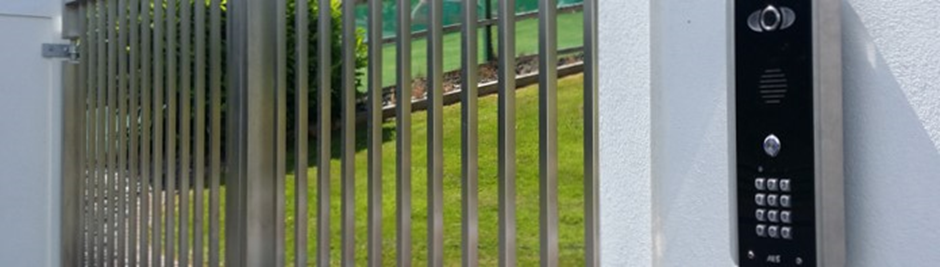
2. More convenient everyday access
Opening a heavy gate by hand quickly becomes inconvenient, particularly when you use the entrance several times a day.
With an automatic system, you can open the gate from your car using a remote, keypad, app or another approved access method. You do not need to park in the road, leave the vehicle and manually move the gate.
This is particularly useful when:
You arrive home in poor weather
The entrance is beside a busy London road
You regularly leave or return late at night
Someone at the property has reduced mobility
Staff vehicles enter throughout the day
The gate is too large or heavy to operate comfortably by hand
Automation also helps make sure the gate closes after use. A manual gate may be left open accidentally, removing much of the security and privacy it was installed to provide.
The opening method should still suit the driveway. Swing gates need enough clear space to move safely, while sliding gates require sufficient room beside the entrance.
Our sliding versus swing electric gates guide explains which option may work better for your property.
3. Improved privacy from the street
Privacy can be difficult to achieve in London, especially where driveways, gardens and ground-floor windows are close to pavements or neighbouring properties.

A solid or partially enclosed electric gate can reduce direct views into the property while keeping the entrance practical.
The level of privacy depends largely on the design.
Open wrought-iron gates provide visibility and a traditional appearance but offer limited screening. Solid aluminium, composite or timber-infill gates create a more private boundary.
You should also consider how the gate affects visibility when leaving the driveway. A fully enclosed gate may improve privacy but make it harder to see pedestrians, cyclists or approaching traffic.
The installer may recommend solutions such as:
Carefully positioned video intercoms
Vehicle detection equipment
Warning lights
Convex mirrors
A gate position that improves the driver’s view
A more open design near critical sightlines
Privacy should never come at the expense of safe access.
4. Easier management of visitors and deliveries
London homes and businesses receive frequent deliveries, tradespeople and visitors.
An electric gate connected to an intercom lets you speak to someone before allowing them onto the property. A video intercom adds visual confirmation, which is particularly useful when you are not expecting a caller.

Some modern systems also allow you to answer the intercom and operate the gate through a smartphone. This can help you manage access when you are elsewhere, although remote opening should only be used when you are confident it is safe to grant entry.
For regular visitors, temporary or scheduled access may be more practical than issuing a permanent remote.
Examples include:
A cleaner who visits every Tuesday
A gardener who needs daytime access
A contractor working for a limited period
A delivery driver using an approved entry process
Staff whose access should only work during business hours
Residents moving into or out of an apartment development
This reduces the number of physical remotes in circulation and gives the property owner or manager better control over active permissions.
For businesses, automated access can also reduce the need for a member of staff to manually open and close the entrance throughout the day.
5. Better control of vehicles and unauthorised parking
Unauthorised parking can be a persistent problem for private driveways, apartment developments, offices and commercial sites.
An electric gate creates a clear controlled-access point. Drivers cannot simply enter because they have found an open driveway or unused parking space.
For a home, this can help prevent turning, parking or access by vehicles that have no reason to be there.
For commercial and multi-occupancy properties, the gate can work alongside access-control systems to separate different users. Residents, staff, visitors and contractors may each receive a suitable form of entry.
The entrance should be designed around the expected traffic level.
A gate used by four household vehicles has very different requirements from one serving a busy office, school, warehouse or residential development. Commercial systems may need:
Higher-duty motors
Faster opening cycles
Traffic lights
Vehicle detection loops
Barriers
Number-plate recognition
Separate pedestrian access
Controls for entry and exit traffic
Integration with an existing access-control system
The survey should consider how vehicles approach, where they wait and whether a queue could obstruct the pavement or road.
6. A gate designed to complement the property
An electric gate is one of the first features visitors see.
The design should therefore suit the building and boundary rather than looking like an unrelated addition.
Traditional London properties may suit wrought iron, decorative steel or timber-infill gates. Contemporary homes and commercial buildings may work better with aluminium, clean horizontal lines or simpler powder-coated finishes.
Common material options include:
Aluminium
Aluminium is light, corrosion-resistant and available in a wide range of colours and finishes. It works particularly well for modern designs and properties where low maintenance is important.
Steel and wrought iron
Steel can be fabricated into simple or highly decorative designs. It provides a strong structure but needs a suitable protective finish to reduce corrosion.
Timber
Timber offers a warmer, more traditional appearance and can provide excellent privacy. However, it generally needs more maintenance than aluminium or properly finished metal.
Composite infill
Composite boards can recreate some of the appearance of timber while reducing regular treatment requirements.
A well-proportioned gate can strengthen the appearance of the entrance and improve kerb appeal. However, no installer should promise that electric gates will automatically increase the monetary value of your property. Their effect on a future sale will depend on the design, quality, condition and preferences of individual buyers.
View our electric gate gallery to compare traditional, contemporary, sliding and swing gate designs.
7. A system that can adapt to changing access needs
Your access requirements may change over time.
A basic remote-control system may be enough initially. Later, you might want to add a video intercom, keypad, smartphone control or different permissions for family members and staff.
Planning the control system properly at the beginning can make later upgrades easier.
For example, you may eventually need to:
Add more users
Remove a lost remote or access fob
Give temporary access to a contractor
Manage the gate from another building
Add a pedestrian entrance
Connect CCTV or an intercom
Restrict entry outside certain hours
Record access events
Improve emergency access arrangements
Not every automation system supports every feature. Discuss future requirements during the survey rather than choosing the cheapest control panel and discovering its limitations later.
Benefits of electric gates for homeowners
For most homeowners, the strongest benefits are privacy, controlled driveway access and convenience.
Electric gates may be particularly useful when:
Your driveway opens directly onto a busy road
Passing vehicles regularly turn on your property
You want to speak to visitors before admitting them
Children or pets use the front garden
A family member finds manual gates difficult to operate
You want a more private boundary
You need controlled access for household staff or contractors
A closed gate may help define the boundary for children and pets, but it should not be treated as a substitute for supervision.
Spaces around hinges, sliding mechanisms and moving gate leaves can present serious hazards when a system has not been correctly designed. Safety must be considered throughout the installation.
Benefits of electric gates for businesses and managed properties
Commercial properties generally need more than a motorised entrance.
The gate may need to control access for staff, customers, delivery vehicles, contractors and emergency services. It must also cope with a higher number of daily operations.
Electric gates can help businesses:
Restrict vehicle access outside working hours
Reduce unauthorised parking
Control entry to staff-only areas
Verify visitors before allowing access
Manage different groups of users
Reduce manual gate operation
Create a clearer entrance and exit process
Integrate the gate with existing security systems
Owners and occupiers of commercial premises also have ongoing responsibilities for the safety and maintenance of powered gates. The Health and Safety Executive says powered gates must be considered individually, maintained over their lifetime and designed to respond safely whenever someone interacts with them.
This also applies to landlords and managing agents responsible for gates in the communal areas of residential developments.
Are electric gates secure?
Electric gates can strengthen access control, but the gate alone cannot guarantee that a property is secure.
Security depends on the complete entrance design, including:
The strength of the gate and posts
Suitable locking arrangements
The height and construction of the surrounding boundary
Protection around hinges and sliding mechanisms
The access-control system
How remotes, fobs and codes are managed
Lighting and CCTV
Regular maintenance
How the gate behaves during a power cut or fault
A strong gate beside a low, easily crossed fence will not provide an effective perimeter. Likewise, sophisticated access controls offer little protection if shared entry codes are never changed.
The installer should look at the entrance as a complete system rather than treating the motor as the main security feature.
What are the disadvantages of electric gates?
Electric gates offer clear benefits, but they are not right for every property or budget.
Points to consider include:
Installation cost
A bespoke automated gate requires more than the gate leaves. The project may include structural work, motors, foundations, electrical cabling, safety equipment and access controls.
Read our electric gate cost guide for London for current guide prices and the factors that influence them.
Maintenance
Powered gates contain moving mechanical and electrical parts. Motors, hinges, tracks, sensors, safety edges and control equipment must be inspected and maintained.
The HSE notes that components can wear or fail and that powered gates need maintenance to remain safe.
Power cuts and faults
The gate needs a safe manual-release process or another suitable backup arrangement. Anyone who may need to operate the release should know where it is and how to use it.
Our guide to using electric gates during a power cut explains the main options.
Planning restrictions
Many electric gates do not require planning permission, but height, location, listed-building status, conservation restrictions and Article 4 directions can affect what you are allowed to install.
Read our London electric gate planning permission guide before committing to a final design.
Space
Swing gates need room to open. Sliding gates need space beside the entrance. Bi-fold gates may work where space is restricted, but they introduce different design and automation requirements.
A site survey is the best way to identify the appropriate layout.
How to choose the right electric gate system
Start with how you use the entrance, not how the gate looks in a brochure.
Before requesting quotations, consider:
Who needs access?
How many vehicles use the entrance each day?
Where will visitors wait?
Do you need pedestrian access?
Would swing or sliding gates suit the driveway?
How much privacy do you want?
Which material suits the property?
Do you need an intercom, keypad or app?
How will the gate operate during a power cut?
Who will maintain it after installation?
A professional survey should then assess the entrance dimensions, ground levels, foundations, existing structures, electrical supply, safety risks and possible planning restrictions.
Do not buy the motor before the gate and site have been assessed. The gate, automation and safety equipment must be specified as one complete system.
Frequently asked questions
What are the main benefits of electric gates?
The main benefits include better access control, easier vehicle entry, improved privacy, more effective visitor management and a gate design tailored to the property.
Do electric gates stop burglars?
No gate can guarantee that a property will not be targeted or entered. Electric gates create a controlled physical boundary and may discourage casual access, but they work best alongside appropriate locks, lighting, CCTV and other security measures.
Are electric gates suitable for small London driveways?
They can be. A sliding, cantilever or bi-fold design may suit a driveway that does not have enough depth for conventional swing gates. The available side space, ground level and pavement position must still be assessed.
Can I automate my existing driveway gates?
Possibly. The installer will need to inspect the gates, posts, hinges, foundations and surrounding area. Gates that work manually are not automatically suitable for powered operation.
Do electric gates work during a power cut?
Most systems have a manual-release mechanism. Battery backup may also be available for certain installations. The installer should demonstrate the release procedure during handover.
How often should electric gates be serviced?
The right interval depends on the system, usage, environment and manufacturer’s instructions. A lightly used residential gate may have different requirements from a commercial gate operating hundreds of times a day.
Are sliding gates more secure than swing gates?
Neither style is automatically more secure. Security depends on the gate construction, locking method, surrounding boundary, installation quality and access controls.
Do electric gates add value to a home?
A well-designed gate may improve kerb appeal and make the entrance more attractive to certain buyers. However, there is no guaranteed increase in property value, and poor design or inadequate maintenance could have the opposite effect.
Are electric gates worth it?
Electric gates are usually most worthwhile when they solve a real problem.
That might mean stopping unauthorised vehicles from using your driveway, creating more privacy, controlling access to a business or removing the daily effort of opening a heavy gate by hand.
The best system is not necessarily the one with the most technology. It is the one that fits your entrance, handles the expected traffic and gives each user an appropriate way to enter.
Arrange an electric gate survey in London
Electric Gates London designs, fabricates, automates and installs bespoke gates for homes, businesses and managed properties across London.
We can assess your entrance, explain the suitable gate styles and help you choose access controls that match the way your property is used.
Arrange a free site survey to receive recommendations and a quotation based on your property.


Comments