
Electric Gate Power Cut: How to Open Your Gate Safely

Updated: Jul 14
An electric gate that stops during a power cut can leave you unable to enter or leave your property.
The solution is usually a manual-release mechanism or a compatible battery-backup system. However, you should not force the gate, dismantle the motor or start changing electrical connections.
Powered gates are heavy moving machines. Once the motor has been disengaged, the gate may move differently from normal and could roll, swing or close unexpectedly.
This guide explains how to deal with an electric gate power cut safely, how to use a manual release and when the problem needs an engineer.

What should you do when an electric gate loses power?
Follow these steps:
Check whether the property has lost power.
Look for obvious gate damage or obstructions.
Find the manual-release instructions and key.
Release and move the gate only if it is safe to do so.
Secure the gate after moving it.
Contact an electric gate engineer if anything feels wrong.
Do not repeatedly press the remote or try to force the gate against the motor.
If someone is trapped, injured or in immediate danger, call 999.
1. Check whether it is a power cut or a gate fault
First, establish whether the electricity supply has failed.
Check whether:
Lights and appliances inside the property are working
Neighbouring properties have power
The gate’s control panel or warning light is illuminated
The consumer unit has tripped
Other outdoor electrical equipment is working
A battery-backup warning is displayed
If the entire property or surrounding area has lost electricity, report or track the power cut through your electricity network operator.
In England, Scotland and Wales, you can call 105 free of charge to reach the local electricity network operator. London is mainly served by UK Power Networks, which also uses 105 for power-cut reports, safety concerns and vulnerable-customer support.
If the property still has electricity but the gate does not respond, the problem may be with:
The gate’s electrical circuit
A tripped protective device
A blown fuse
The motor
The control panel
A photocell or safety device
A damaged cable
A remote or access-control system
The gate’s mechanical components
Do not assume that every unresponsive gate is caused by a power cut.
2. Check the entrance before touching the gate
Stand back and inspect the complete entrance.
Look for:
A vehicle or object blocking the gate
Stones, leaves or debris in a sliding track
A fallen branch
Damaged hinges
A gate leaf sitting at an unusual angle
A sliding gate that appears to have left its track
Loose cables
Water inside electrical equipment
A damaged motor cover
Smoke, burning smells or unusual heat
Someone or something trapped near the gate
Do not attempt manual operation if the gate looks unstable, damaged or partly detached.
A power cut may have happened at the same time as a separate mechanical failure. Releasing a damaged gate could allow it to move or fall without control.
The Health and Safety Executive warns that powered gates can present impact, crushing, trapping and electrical hazards. Weather, water ingress, damaged cabling and mechanical failure can also affect their safe operation.
3. Find the manual-release mechanism
Every properly designed automated gate should have a way to disengage the drive and allow manual operation when necessary.
The release may use:
A dedicated key
A lever
A handle
A hydraulic valve
A release cable
A mechanism beneath a motor cover
The exact process depends on the gate motor.
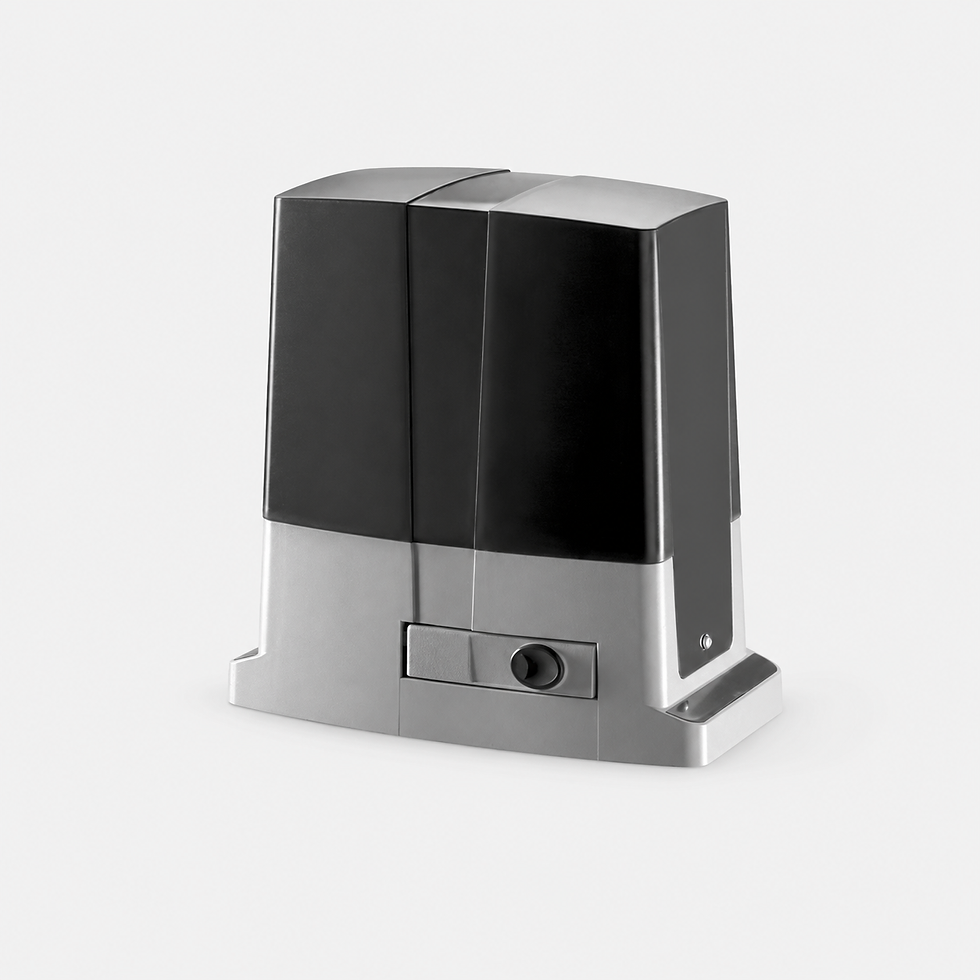
A sliding-gate motor may have a release lock on the side of its housing. A swing-gate ram may use a key and lever. An underground operator may have a release mechanism near the bottom hinge.
Do not follow generic online instructions for a different motor.
Use the instructions supplied with your gate or ask the installer to demonstrate the process. The HSE says users should receive information explaining how to switch the gate off, place it into a safe condition and release someone if necessary.
4. Locate the manual-release key
The release key or tool should be stored somewhere that authorised users can reach during a power cut.
It should not be:
Locked inside an inaccessible building
Stored in a remote office
Left with only one person
Mixed with unlabelled spare keys
Kept inside the gate motor housing
Gate Safe recommends keeping release keys readily available and ensuring current users understand the procedure. It also suggests a secure key safe close to the gate where appropriate.
For communal or commercial entrances, selected staff, residents or site managers should know:
Where the key is stored
Who has access
How to use the release
How to secure the gate afterwards
Who to contact if the release fails
Do not publicly share a key-safe code or leave the release tool where an unauthorised person can use it.
5. Follow the manufacturer’s release instructions
Before releasing the gate:
Keep children, pets and bystanders away.
Make sure nobody is standing in the gate’s path.
Check that the gate is not resting on a slope in a way that could cause uncontrolled movement.
Follow the supplied instructions for switching off or isolating the system where required.
Stand in a stable position.
Be ready for the gate to move once the motor disengages.
Insert the release key and follow the instructions for your specific motor.
Do not use excessive force.
If the key will not turn, the lever is seized or the mechanism appears damaged, stop. Forcing it could snap the key or damage the gearbox.
Gate Safe warns that manual-release mechanisms can seize when they are not maintained. Underground operators, electro-mechanical rams and hydraulic systems may each require different release procedures and maintenance.
6. Move the gate carefully
Once the drive has been released, test the gate gently.
A correctly functioning gate should normally be capable of controlled manual movement. However, size, weight, wind, ground slope and mechanical condition can all affect how difficult it is to move.
For swing gates
Watch for:
Wind catching the gate leaf
A gate swinging back towards you
Sloping ground
Dropped or damaged hinges
Fingers becoming trapped around hinges
The gate moving faster than expected
Keep your hands away from hinge gaps and other closing points.
For sliding gates
Check that:
The track is clear
The gate remains upright
The rollers remain properly aligned
The gate has not moved beyond its normal end position
Nothing is caught beneath it
The opening is clear before movement begins
Do not attempt to move a sliding gate that appears to have left its track or support system.
If the gate is unusually heavy, jammed or unstable, stop and call an engineer. Do not ask several people to push harder. Extra force can turn a mechanical fault into a serious injury risk.
7. Secure the gate after opening it
Releasing the motor may remove the normal resistance that holds the gate in position.
Do not leave the gate where it can:
Swing in the wind
Roll down a slope
Move into a pavement or road
Strike a vehicle
Close on a person
Leave the property unsecured
Follow the manufacturer’s instructions for securing the gate in the required position.
Depending on the system, this may involve re-engaging the motor once the gate has been moved, using a designed mechanical restraint or following a site-specific emergency procedure.
Do not tie the gate using an improvised rope where it could create another hazard.
For a communal or commercial entrance, consider whether the safest temporary position is fully open, fully closed or controlled by staff. That decision should form part of the property’s power-cut plan.
How do battery-backup systems work?
A battery-backup unit can keep compatible electric gates operating when the mains supply fails.
The system may automatically switch to battery power, allowing a limited number of opening and closing cycles.
The number of available cycles depends on:
Battery capacity
Battery age and condition
Gate weight
Motor type
Temperature
Connected accessories
How frequently the gate is operated
How long the power cut lasts
Battery backup does not usually provide unlimited normal operation.
During an outage:
Avoid unnecessary gate cycles.
Do not repeatedly test the gate.
Prioritise essential access.
Follow any low-battery warnings.
Keep the manual-release key available.
Batteries deteriorate over time, even when rarely used. They should be included in the gate’s inspection and maintenance schedule.
How do you know whether your gate has battery backup?
Look at the gate documentation or ask the installer.
Do not assume that every 24V gate system automatically contains functioning backup batteries. A control system may support battery backup without the battery unit having been installed.
Possible signs include:
A battery enclosure beside the control panel
A backup module listed in the quotation
Battery indicators inside the user interface
A specification referring to emergency operation
The gate continuing to work after the mains supply fails
Do not open electrical control equipment to search for a battery unless you are competent and authorised to do so.
Can you add battery backup to an existing electric gate?
Sometimes.
Compatibility depends on the motor, control panel, system voltage, expected usage and available installation space.
An engineer should check:
Whether the control panel supports battery operation
The correct battery type and capacity
The number of cycles required
The condition of the current automation
Whether the access controls also need backup power
Whether an electric lock will release correctly
How the system should behave when battery power becomes low
A backup battery for the motors may not keep every connected device working. Intercoms, Wi-Fi routers, GSM systems, electric locks and number-plate recognition equipment may have separate power requirements.
Can you use a generator for an electric gate?
A properly designed standby generator may support an electric gate as part of a wider emergency-power system.
However, it should not be treated as a quick DIY solution.

Generators and other secondary electrical supplies need appropriate switching, isolation and protection. Never connect a portable generator to fixed wiring through an improvised cable or ordinary socket.
For most residential gates, a compatible battery-backup system and a working manual release are usually more straightforward than installing a generator solely for the gate.
Commercial premises, apartment developments and critical-access sites may need a professionally designed standby-power arrangement.
Can solar power keep an electric gate working?
A solar gate system normally uses panels to charge a battery, which then powers compatible automation.
It may be suitable where running a mains cable to the entrance would be difficult. However, it is not automatically a reliable emergency solution for every London property.

Performance depends on:
Shade from buildings and trees
Seasonal daylight
Panel position
Battery capacity
Number of daily gate cycles
Gate size and weight
Intercom and access-control consumption
How long the site must continue operating without charge
A solar panel without suitable battery storage will not keep a gate operating at night or during prolonged low-light conditions.
The system must be designed around the entrance rather than added as a generic backup product.
What happens when power returns?
Do not assume the gate will immediately return to normal operation.
Before re-engaging the motor:
Make sure the gate is positioned as required by the manufacturer.
Check that nobody is within the movement area.
Re-engage the manual release correctly.
Restore power according to the supplied instructions.
Test the gate from a safe position.
Watch a complete opening and closing cycle.
Check that the safety devices respond as expected.
Some systems may need to relearn their open and closed positions after a power interruption or manual movement.
Stop using the gate and contact an engineer if it:
Moves in the wrong direction
Stops before reaching its normal position
Slams against its stops
Makes unusual noises
Moves unevenly
Fails to respond to safety devices
Repeatedly trips the electrical supply
Refuses to re-engage
Shows a fault code
Do not change force, speed or control-board settings to make the gate move again.
What if the gate stops halfway?
A gate that stops halfway may be experiencing:
A complete power cut
A failing backup battery
An obstruction
A safety-device activation
A motor or gearbox fault
A damaged hinge or track
A control-panel fault
Overheating
An electrical-supply problem
Keep people away from the gate and inspect it from a safe distance.
Do not stand beneath, between or immediately beside a partially open gate. Do not push it while the motor remains engaged.
Use the manual release only when the gate appears structurally stable and you have the correct instructions.
What if the manual release does not work?
Call an electric gate engineer when:
The release key is missing
The key will not turn
The mechanism has seized
The release lever is damaged
The motor will not disengage
The gate remains too heavy to move
The gate is jammed
The gate appears unstable
The sliding gate has left its track
A hinge or post is damaged
Electrical equipment is wet, smoking or damaged
Do not dismantle the motor or gearbox to release the gate.
A failed manual release is itself a maintenance problem. It should be repaired even if power has returned and the gate is operating automatically again.
Why the manual release must be maintained
The release may remain unused for years and then be needed urgently.
Lack of use can lead to:
Corrosion
Seized locks
Stiff levers
Worn release components
Broken keys
Dirt or water ingress
Loss of the key
Users forgetting the procedure
Gate Safe describes manual release as a critical part of an automated gate system. It is needed not only during breakdowns and power cuts, but potentially to release someone trapped by the machine.
Ask for the manual release to be checked during routine servicing.
The engineer should also confirm that the gate remains controllable after the motor has been disengaged.
Preparing your home for an electric gate power cut
Before an outage happens:
Find the manual-release key.
Label it clearly.
Store it securely near the gate.
Read the user instructions.
Ask the installer for a demonstration.
Make sure other authorised adults understand the process.
Check whether battery backup is installed.
Include the battery in servicing.
Save the gate engineer’s contact details.
Keep the area around the gate clear.
Make sure there is another safe pedestrian exit where required.
Do not wait until you are locked outside in the dark to learn how the release works.
Power-cut planning for businesses and managed properties
Commercial premises, apartment blocks and managed developments need a written procedure.
The plan should identify:
Who is responsible during a power failure
Where release keys are stored
Which staff or residents are trained
Whether the gate should remain open or closed
How vehicles will enter and leave
How pedestrians will exit
How emergency services will gain access
Whether battery or generator backup is available
Who will secure the site
Who will call the gate engineer
How the gate will be checked after power returns
The HSE says owners and occupiers of commercial premises must keep powered gates safe and assess the necessary servicing and inspections. Users should also receive information on switching the gate off or putting it into a safe condition.
For sites that need emergency-service access, the gate design may need a fireman’s switch, accessible manual release, battery or generator backup, and suitable pedestrian egress. The appropriate arrangement depends on the site and must be planned during design.
What should you do if someone is trapped?
Treat it as an emergency.
Call 999.
Stop or isolate the gate if it is safe and you know how.
Keep other people away.
Use the manual release only if you have been trained and can do so without worsening the situation.
Do not restart the motor.
Follow the emergency services’ instructions.
An emergency-stop control may stop powered movement but may not remove the force trapping a person. The manual release or another planned method may still be needed.
This is why the release tool must remain accessible and users must understand the procedure.
Frequently asked questions
Can electric gates be opened during a power cut?
Usually, yes. Most properly designed systems have a manual-release mechanism. Some also include battery backup. The exact process depends on the motor and gate design.
Where is the manual release on an electric gate?
It may be on the sliding-gate motor, swing-gate ram, underground operator or hydraulic control unit. Consult the user instructions because the location and procedure vary.
Can I force an electric gate open?
No. Forcing the gate while the motor remains engaged can damage the automation and put you at risk. Use the correct manual-release procedure.
Are electric gates automatically fitted with batteries?
No. Some control systems support battery backup, but the batteries may be an optional extra. Check your installation documents or ask the installer.
How long will an electric gate battery last during a power cut?
It depends on the battery, gate weight, motor, temperature, system condition and number of operations. Backup usually provides a limited number of cycles rather than indefinite normal operation.
Why is my electric gate not working after the power returns?
The gate may need to be re-engaged, reset or recalibrated. There may also be a blown fuse, damaged battery, control fault or unrelated mechanical problem.
Should I leave the gate open during a power cut?
That depends on the property’s security, traffic and emergency-access requirements. Once manually released, the gate must be secured so it cannot move unexpectedly.
Can I manually open a heavy sliding gate?
Only when the gate remains stable, the track is clear and it moves with controlled effort. If it is extremely heavy, jammed or misaligned, call an engineer.
Who should know how to release a communal gate?
Relevant site managers, staff or authorised residents should understand the procedure and know where the release key is kept. Access to the key must still be controlled.
Who should I call about a London power cut?
Call 105 free of charge to reach the electricity network operator. For a fault affecting only the gate, contact a competent electric gate engineer.
Need help with an electric gate that will not open?
Electric Gates London provides electric gate repairs, maintenance and fault diagnosis for homes, businesses and managed properties across London.
The manual release is seized
The battery backup has failed
The gate will not re-engage
The gate stopped halfway
The system repeatedly trips
The entrance appears damaged or unsafe
The gate does not return to normal after power is restored
Arrange an inspection rather than forcing the gate or changing its electrical settings.


Comments